HomeAll booksPollyanna
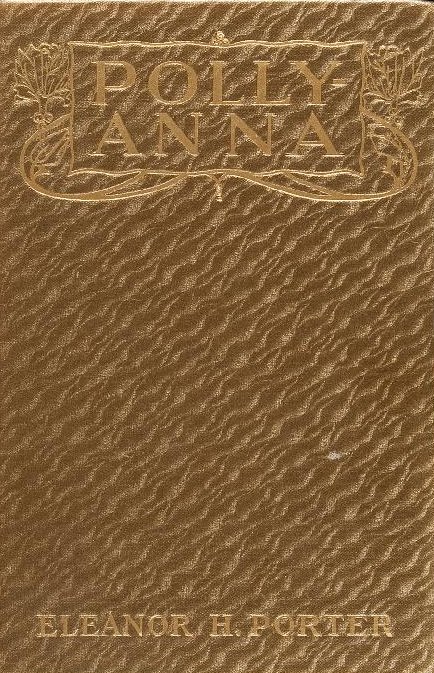
Pollyanna cover
School & family

Pollyanna

Eleanor H. Porter · first published 1913

An orphan arrives at her aunt's house with a borrowed trunk and one inherited game — find the thing to be glad about in whatever just happened — and plays it until a whole Vermont town changes shape around her.

Free EPUB & KindleGrades 4–7
Worth knowing ⓘ
Worth knowing: Pollyanna's father, the minister of a small mission church, died two weeks before chapter one; her mother died years earlier, and all her brothers and sisters died as babies. Her clothes come from missionary barrels, and the Glad Game begins with crutches that arrived in one instead of the doll she had asked for. In chapter 23 she is hit by a motor car crossing the road, and in chapter 26 she hears through an open door that she will never walk again; from there to chapter 31 she is in bed, and for much of it she cannot play her own game. Church runs through the whole book — her father counted eight hundred "rejoicing texts" in the Bible, a full chapter turns on a minister rewriting his sermon, and Pollyanna speaks of her parents as Heaven angels. Period vocabulary: the Ladies' Aid raise money for "the heathen" throughout, and they decline to take in a local orphan boy because he would earn them no credit in the report; Jimmy Bean says "Honest Injun" once. In chapter 28 a woman the respectable families of the town do not call on comes to the house to ask after Pollyanna; what she is is never stated.

EPUB works on any device · two-minute setup guide → ·listening, print & film links go to Amazon (affiliate)

Why your kid will love it

01

The game has rules you can play tonight

Find something to be glad about in whatever has just happened, and the harder that is, the better the game counts. It starts with a pair of crutches that arrived in a charity barrel when she had asked for a doll: be glad you don't need them. Kids start playing it on each other before chapter six, usually to win an argument.

02

She simply walks in and starts talking

An invalid who hasn't left her bed in years, a recluse whose gate nobody opens, a boy sleeping in a shed, a minister who has lost his nerve in the pulpit. Pollyanna's entire method is to arrive and begin a conversation, and the book is a sequence of locked doors coming open.

03

The game breaks, and she says so

Two-thirds in, something happens that she cannot find anything glad about, and she tells people that. A kid braced for thirty-two chapters of sunshine sits straight up — the book knows exactly what it is asking of her, and lets her fail at it for a while.

Reading it together?

Warm-ups, real questions, and something to do together. No worksheets.Book club questions →

The background for parents

The pitch

Pollyanna Whittier arrives in Beldingsville, Vermont, with a trunk the Ladies’ Aid bought her and one thing her father left behind: a game. You find the thing to be glad about in whatever has just happened, and the harder that is, the better it counts. She plays it at an aunt who has given her the bare attic room out of duty, at an invalid who has not left her bed in years, at a recluse whose gate nobody opens — and then, two-thirds of the way through, something happens that she cannot play it at, and the book stops and stays there with her.

What to know

Thirty-two short chapters, written as a weekly serial, so each one arrives with its own shape and its own ending: this is a book built for a chapter a night. The dialect is the work. Nancy the kitchen maid talks in thick New England vernacular — “I ain’t sayin’ that I’ll play it very well, and I ain’t sayin’ that I know how, anyway; but I’ll play it with ye, after a fashion — I just will, I will!” — and reading her aloud is most of the fun and all of the difficulty. A confident grade-4 reader handles the prose; the dialect is the part that may want a grown-up nearby. Worth knowing before you start: for a century “Pollyanna” has been an insult, shorthand for someone who won’t look at anything wrong, and the girl in the book is a poorer fit for that word than the word suggests. Our edition is the complete 1913 text, including Porter’s dedication to her cousin Belle. Stockton Mulford illustrated the first edition, but the only open scans of his plates are grey halftones from a later printing, so this ships as text and cover only; the cover is the 1913 L. C. Page front board itself, gold stamped on brown ribbed cloth. The last third turns on an accident — the content note has the specifics.

Life when written

Eleanor Hodgman Porter was born in Littleton, New Hampshire, in 1868, trained as a singer at the New England Conservatory, and only turned to fiction after she married in 1892 and moved to Massachusetts. She wrote Pollyanna as a weekly serial for The Christian Herald, a religious newspaper, across 1912 and 1913 — which is why it moves in episodes, and why church is in every corner of it. The missionary barrel that clothes Pollyanna, and that sends crutches the year she asked for a doll, was a real institution: women’s societies in comfortable eastern congregations packed barrels of used clothes, books and food and shipped them west to underpaid ministers, who unpacked whatever turned up. The book sold enormously — eighth on the American bestseller list in 1913, second in 1914 — and a 1920 copy scanned by the University of North Carolina prints its own history on the copyright page: first impression February 1913, forty-seventh impression February 1920, four hundred and seventy thousand copies. Porter died three months after that printing, at fifty-one.
The book vs. the movie

Disney kept the girl and the game and rebuilt the plot around them — a town in revolt against Aunt Polly, a bazaar, a fall from a window. What the book keeps is the six chapters when the game stops working.How they differ →

If they like it, read these next

Modern books (still in copyright, so not free) that scratch the same itch.

Because of Winn-Dixie by Kate DiCamillo

For the kid who liked watching Pollyanna collect a town one lonely adult at a time — Opal does exactly that, and DiCamillo lets the sadness underneath stay where it is.

Wonder by R. J. Palacio

The modern book that asks the same question: what happens to everyone else when one child refuses to behave the way the room expects. Auggie has precepts where Pollyanna has the game.

Affiliate links. They never affect our picks.

Prefer a printed copy? SeaWolf Press hardcover, with Stockton Mulford's illustrations (affiliate links). Not sure whether your reader needs the original or an abridged edition? Our guide to choosing →

Read it on any device

Quick answers

What age is Pollyanna right for?

We shelve it for grades 4–7 — that's where the language and the length sit for a reader on their own. Read aloud, it works earlier, from about age 7–8 — kids follow a story by ear well before they can read it alone.

Is Pollyanna scary?

None — but a serious accident. Pollyanna's father, the minister of a small mission church, died two weeks before chapter one; her mother died years earlier, and all her brothers and sisters died as babies. Her clothes come from missionary barrels, and the Glad Game begins with crutches that arrived in one instead of the doll she had asked for. In chapter 23 she is hit by a motor car crossing the road, and in chapter 26 she hears through an open door that she will never walk again; from there to chapter 31 she is in bed, and for much of it she cannot play her own game. Church runs through the whole book — her father counted eight hundred "rejoicing texts" in the Bible, a full chapter turns on a minister rewriting his sermon, and Pollyanna speaks of her parents as Heaven angels. Period vocabulary: the Ladies' Aid raise money for "the heathen" throughout, and they decline to take in a local orphan boy because he would earn them no credit in the report; Jimmy Bean says "Honest Injun" once. In chapter 28 a woman the respectable families of the town do not call on comes to the house to ask after Pollyanna; what she is is never stated.

Is the free ebook really the whole book?

Yes — the complete, unabridged text. Pollyanna was published in 1913, so it's in the US public domain: sharing it free is legal, and there's no signup or catch. We build the ebook ourselves from the original edition.

More free classics like this