HomeAll booksThe Railway Children
The Railway Children cover
School & family · Adventure

The Railway Children

E. Nesbit · first published 1906

Three children lose their father overnight, move to a cottage by the line, and start waving at the 9:15 in the hope it carries their love to him.

Free EPUB & KindleGrades 4–7
Worth knowing ⓘ
Worth knowing: Father is arrested in the first chapter and imprisoned for a crime he did not commit. The children are not told; Bobbie learns it in chapter ten from an old newspaper and keeps it to herself. The family is suddenly poor, and often cold and hungry. A Russian exile describes being marched to Siberia in a chain gang and not knowing whether his wife and children were still alive. A landslide nearly wrecks a train, and a boy breaks his leg alone in a tunnel.

EPUB works on any device · two-minute setup guide → ·listening, print & film links go to Amazon (affiliate)

Why your kid will love it

01

The red petticoat rescue

A landslide buries the line minutes before the express is due. The children tear their red flannel petticoats into six flags and run at the oncoming train waving them. Few scenes in children's books are harder to read sitting still.

02

A whole world at the end of the garden

A muddy embankment becomes their kingdom — a station, a porter who becomes a friend, a signal box, a tunnel, and one train they wave at every single morning. Any kid who has ever claimed a patch of ground gets this immediately.

03

Bobbie works it out alone

The grown-ups have decided the children are too young to be told where Father went. Bobbie finds out anyway, by herself, from an old newspaper, and then carries it by herself for a while. Kids recognise that arrangement exactly.

Reading it together?

Warm-ups, real questions, and something to do together. No worksheets.Book club questions →

The background for parents

The pitch

Three children come downstairs one evening to find their father gone, their comfortable London life finished, and a cold cottage in the country waiting. At the bottom of the garden runs a railway, and the railway hands them back a world: a station, a porter, a tunnel, a signal box, and one train they wave at every morning. The trouble underneath is real and never explained away, and the book’s answer to it is other people.

What to know

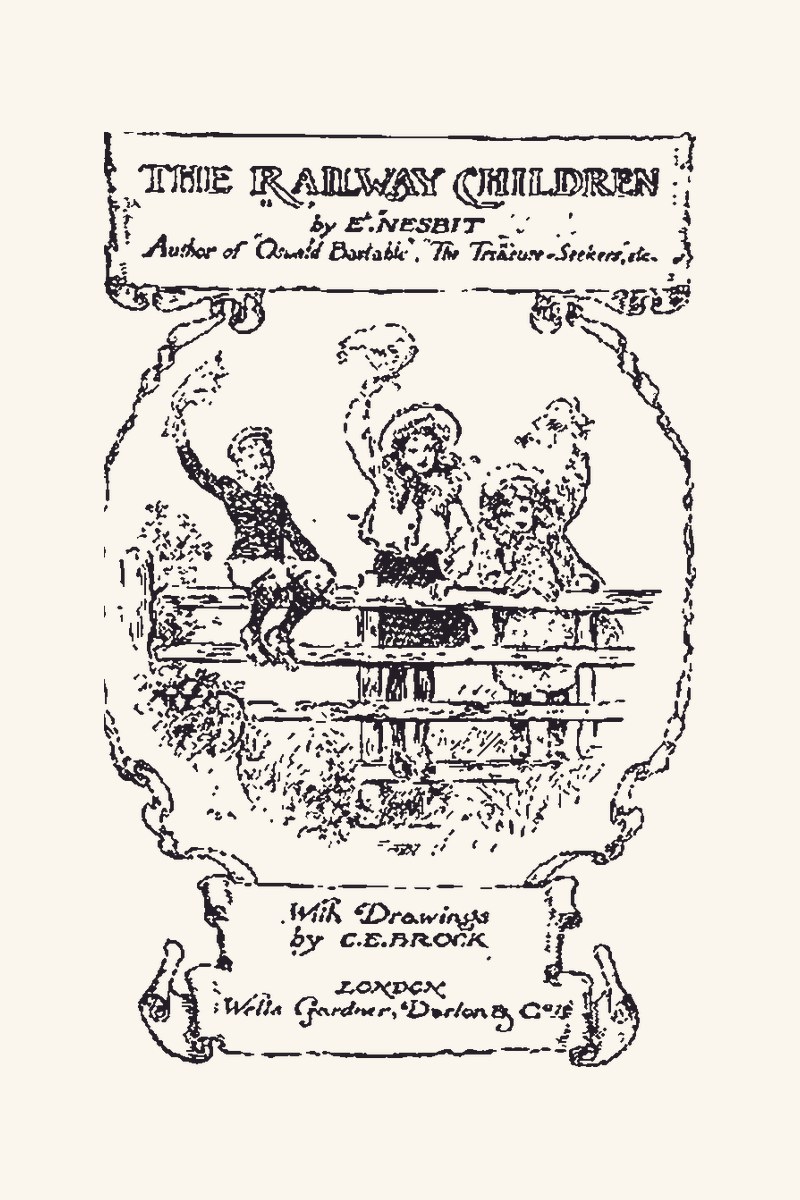
Nesbit wrote this as a magazine serial, and it still moves like one — fourteen chapters, each a complete episode with its own small crisis, which makes it an easy book to read a chapter a night and a very good one to read aloud. The English is Edwardian and lightly formal but never ornate, so a confident grade-4 reader manages it and a grade-6 reader flies. Our edition is the complete 1906 text, including Nesbit’s dedication to her son Paul, “behind whose knowledge of railways my ignorance confidently shelters.” No public-domain illustrated edition of this book exists that we could use, so it ships as text and cover only; the cover is C. E. Brock’s own drawing from the 1906 first edition’s title page. Father’s imprisonment drives everything, and the children spend most of the book not knowing — the content note has the specifics.

Life when written

Nesbit wrote this in 1905, in a Britain that ran on steam. A country station was the hinge of village life: post, parcels, coal, news and people all arrived on the same rails, and a train that passed at 9:15 passed at 9:15, so a family could set its whole day by it. She walked the line near Grove Park in south-east London and watched the trains go through. The injustice at the centre of her plot was in every newspaper she opened — the Dreyfus affair, in which a French officer was convicted of spying on forged evidence and not fully cleared until 1906 — and the Russian political exiles who had made London their refuge gave her Mr Szczepansky; Nesbit knew two of the most famous of them, Sergius Stepniak and Peter Kropotkin.
The book vs. the movie

The 1970 film is unusually faithful — its director bought the rights off his own daughter's bookshelf and refused to change much. What no film can carry across is Nesbit's narrator.How they differ →

If they like it, read these next

Modern books (still in copyright, so not free) that scratch the same itch.

Three siblings sent to the English countryside in wartime, looking for someone to take them in — the closest thing in print to the feeling of Three Chimneys.

The Penderwicks by Jeanne Birdsall

Sisters, a strange house for a summer, and a boy they adopt. Birdsall writes deliberately in Nesbit's tradition, and a kid who liked the rhythm of one will feel at home in the other.

Affiliate links. They never affect our picks.

Prefer a printed copy? Puffin Clothbound Classics hardcover (affiliate links). Not sure whether your reader needs the original or an abridged edition? Our guide to choosing →

Read it on any device

Quick answers

What age is The Railway Children right for?

We shelve it for grades 4–7 — that's where the language and the length sit for a reader on their own. Read aloud, it works earlier, from about age 6–7 — kids follow a story by ear well before they can read it alone.

What reading level is The Railway Children?

The unabridged text measures 840L Lexile, AR level 5.5 (9 points). (one list shows 920L.) In everyday terms: grades 4–7, and easier as a read-aloud.

Is The Railway Children scary?

Mild — one real scare on the line. Father is arrested in the first chapter and imprisoned for a crime he did not commit. The children are not told; Bobbie learns it in chapter ten from an old newspaper and keeps it to herself. The family is suddenly poor, and often cold and hungry. A Russian exile describes being marched to Siberia in a chain gang and not knowing whether his wife and children were still alive. A landslide nearly wrecks a train, and a boy breaks his leg alone in a tunnel.

Is the free ebook really the whole book?

Yes — the complete, unabridged text. The Railway Children was published in 1906, so it's in the US public domain: sharing it free is legal, and there's no signup or catch. We build the ebook ourselves from the original edition.

More free classics like this