01
It's genuinely funny
Not gentle-smile funny — laugh-out-loud absurd. Croquet with flamingos, a tea party stuck at six o'clock, a trial with the verdict first.
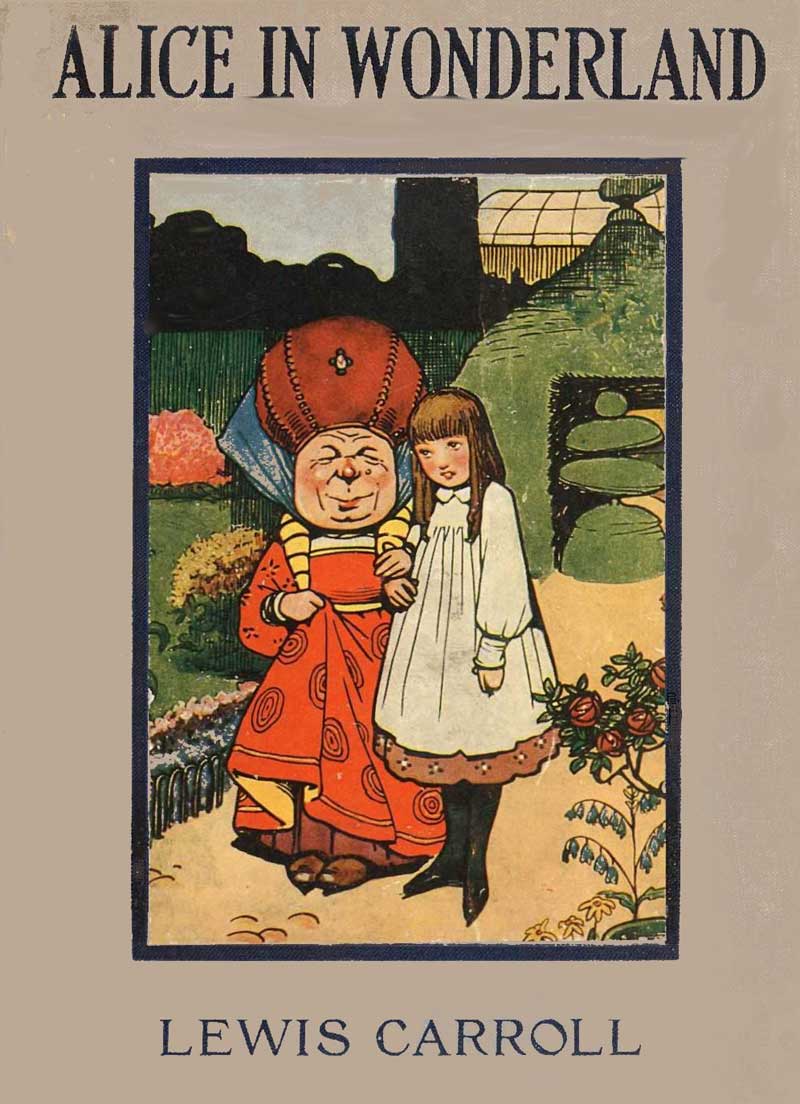
The funniest strange book in the children's canon — and the shortest big-name classic there is.
EPUB works on any device · two-minute setup guide → ·listening, print & film links go to Amazon (affiliate)
Not gentle-smile funny — laugh-out-loud absurd. Croquet with flamingos, a tea party stuck at six o'clock, a trial with the verdict first.
Twelve short, self-contained episodes. Read one at bedtime and stop without losing anyone — perfect for kids who bail on long arcs.
Every grown-up in Wonderland is ridiculous, and Alice's unimpressed logic is the punchline. Children have loved that for 160 years.
A girl follows a waistcoat-wearing rabbit down a hole and lands in the sharpest nonsense ever written — croquet with flamingos, a tea party stuck at six o’clock forever, a trial where the verdict comes before the evidence. A century and a half on, it is still the funniest strange book in the children’s canon.
At about 27,000 words, this is the shortest famous classic on our shelf. The chapters are self-contained, so you can read one at bedtime and stop without losing anyone. The Victorian vocabulary is real, but the episodes are short, which makes it a good read-aloud for younger kids while grades 4–7 handle it on their own. If your child knows the Disney movie, the book will feel familiar at first, and then it gets much stranger. That’s the fun of it.
Lewis Carroll — really Charles Dodgson, a mathematics lecturer at Oxford — first told the story aloud in 1862, rowing the real Alice Liddell and her sisters up the Thames on a summer picnic. Victorian England ran on manners: children were expected to recite moral verses, sit straight at tea, and speak when spoken to. Children’s books of the day existed mostly to improve their readers — which is exactly what Wonderland gleefully refuses to do.
Modern books (still in copyright, so not free) that scratch the same itch.
The closest thing the 20th century produced to Alice — wordplay-drunk nonsense with a real brain underneath.
For the kid who liked Wonderland best when it got unsettling — a door to another world with modern nerve.
Affiliate links. They never affect our picks.
Prefer a printed copy? Puffin Classics paperback (affiliate links). Not sure whether your reader needs the original or an abridged edition? Our guide to choosing →
Send the free EPUB to your Kindle with Amazon's free Send to Kindle — it appears in the library like any book.
Opens straight in Apple Books. Tap the file, choose Books, done — great for bedtime read-alouds.
Google Play Books opens it in a couple of taps, and syncs your place across devices.
Apple Books on a Mac, or the free Calibre app on Windows. No account needed.
We shelve it for grades 3–7 — that's where the language and the length sit for a reader on their own. Read aloud, it works earlier, from about age 6–7 — kids follow a story by ear well before they can read it alone.
The unabridged text measures 880L Lexile, AR level 7.4 (5 points). (editions measure 850L-940L.) In everyday terms: grades 3–7, and easier as a read-aloud.
None — just strange.
Yes — the complete, unabridged text, with the original Arthur Rackham illustrations. Alice's Adventures in Wonderland was published in 1865, so it's in the US public domain: sharing it free is legal, and there's no signup or catch. We build the ebook ourselves from the original edition.