01
It moves fast
Short chapters, a new creature or country in almost every one — the pages turn themselves, even for a reluctant reader.
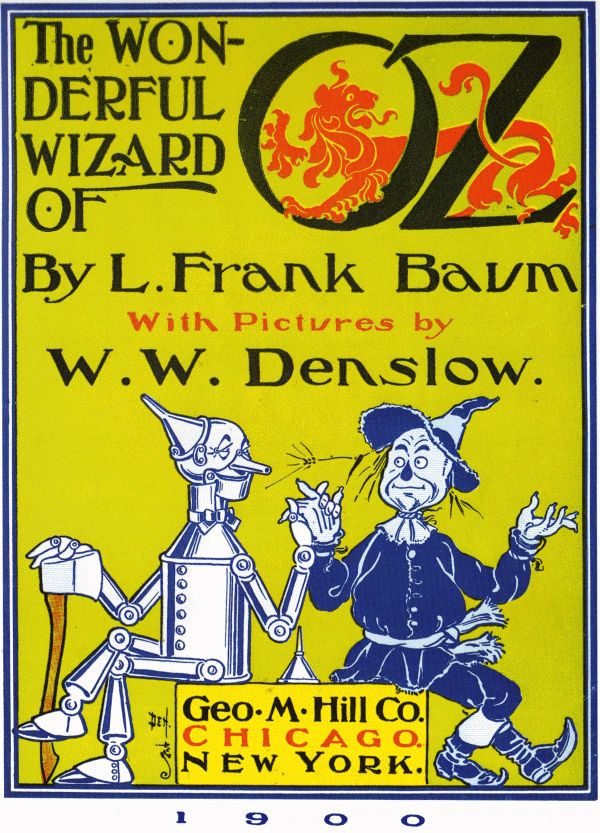
The great American fairy tale — and the book keeps going into countries the movie never shows.
EPUB works on any device · two-minute setup guide → ·listening, print & film links go to Amazon (affiliate)
Short chapters, a new creature or country in almost every one — the pages turn themselves, even for a reluctant reader.
Kids who know the film get to discover a whole second half — the china country, the fighting trees, the hammer-heads — that the movie leaves out.
Watch the 1939 film →Dorothy wins by being loyal and level-headed, not by fighting. A hero younger kids can actually see themselves in.
A Kansas farm girl is carried by tornado into a country of witches, talking scarecrows, and one enormous humbug. It’s the great American fairy tale — written to be, in Baum’s own words, a wonder-tale with “the heartaches and nightmares left out,” which is exactly why it still works on a modern eight-year-old.
The chapters are short and something new happens in almost every one. We’ve found it’s one of the easiest classics to start with, especially if your child has seen the movie. They’ll already know the characters, and the book will still surprise them. The story keeps going past the Emerald City, into chapters the film never touched, and the Tin Woodman’s backstory and the china country are stranger than anything the movie shows. Grades 3–6 can read it on their own, and it makes a great read-aloud from about age six.
Baum wrote it in Chicago in 1900, when America was still more farm than city and a Kansas homestead really was a small gray house on an enormous gray prairie. Electricity was a marvel most families had never touched, and the gleaming White City of Chicago’s 1893 World’s Fair — which many believe inspired the Emerald City — had just shown Americans what a magical metropolis might look like. Fairy tales still came from Europe; Baum set out to write the first great one that was American to the bone.
Modern books (still in copyright, so not free) that scratch the same itch.
Modern kids tumbling into a storybook world — the most direct heir to Dorothy's trip, and a six-book series if it lands.
Newbery-winning fantasy with the same gentle strangeness — for the kid who liked Oz's dreamlike side more than its adventure side.
Affiliate links. They never affect our picks.
Prefer a printed copy? Puffin Classics paperback (affiliate links). Not sure whether your reader needs the original or an abridged edition? Our guide to choosing →
Send the free EPUB to your Kindle with Amazon's free Send to Kindle — it appears in the library like any book.
Opens straight in Apple Books. Tap the file, choose Books, done — great for bedtime read-alouds.
Google Play Books opens it in a couple of taps, and syncs your place across devices.
Apple Books on a Mac, or the free Calibre app on Windows. No account needed.
We shelve it for grades 3–6 — that's where the language and the length sit for a reader on their own. Read aloud, it works earlier, from about age 5–6 — kids follow a story by ear well before they can read it alone.
The unabridged text measures 1030L Lexile, AR level 7 (7 points). In everyday terms: grades 3–6, and easier as a read-aloud.
Mild. Mild peril: the Kalidahs and the Wicked Witch are the two scary stretches, both brief. The tone stays warm throughout.
Yes — the complete, unabridged text, with the original W. W. Denslow illustrations. The Wonderful Wizard of Oz was published in 1900, so it's in the US public domain: sharing it free is legal, and there's no signup or catch. We build the ebook ourselves from the original edition.