HomeAll booksA Christmas Carol
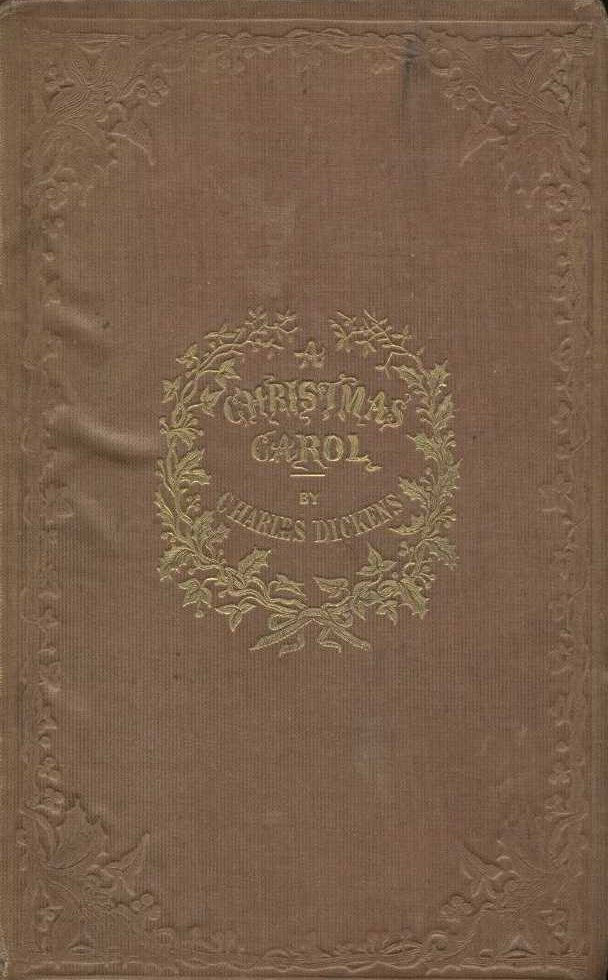
A Christmas Carol cover
Spooky · School & family

A Christmas Carol

Charles Dickens · first published 1843

Three ghosts in one night turn the meanest man in London kind — the original ghost story of Christmas, with the hand-coloured pictures Dickens paid for himself, short enough to finish by Christmas Eve.

Free EPUB & KindleGrades 5–8Original John Leech (the original 1843 plates — four hand-coloured etchings and four engravings) art
Some — see note ⓘ
Worth knowing: The book opens on a death — 'Marley was dead: to begin with' — and the ghost scenes are genuinely eerie: Marley's ghost drags a chain of cash-boxes and padlocks, unwinds the bandage round its head so its jaw drops to its chest, and the night sky outside Scrooge's window fills with wailing chained phantoms (Stave One). In Stave Two Scrooge revisits himself as a boy left alone at boarding school over Christmas, and the death of his younger sister Fan is mentioned. In Stave Three the Ghost of Christmas Present says Tiny Tim will die if nothing changes — 'I see a vacant seat... and a crutch without an owner, carefully preserved' — and quotes Scrooge's own words about 'surplus population' back at him; the stave ends with two starved children named Ignorance and Want, 'yellow, meagre, ragged, scowling, wolfish,' whose engraving is included in this edition. Stave Four is the darkest: a silent hooded phantom shows Scrooge his own future corpse, plundered by his charwoman and laundress, who sell his bed-curtains and the shirt he was to be buried in; the Cratchits mourn Tiny Tim, dead in that future; Scrooge reads his own name on a gravestone. All of it is reversed in Stave Five. Christianity is woven through — church bells, the Cratchits walking home from church, Tiny Tim hoping the congregation saw him 'because it might be pleasant to remember upon Christmas Day, who made lame beggars walk, and blind men see.' Victorian child poverty is shown plainly and is the point.

EPUB works on any device · two-minute setup guide → ·listening, print & film links go to Amazon (affiliate)

Why your kid will love it

01

The ghosts earn their keep

Marley's ghost unwinds the bandage round its head and its jaw drops onto its chest. A hearse goes up the staircase ahead of Scrooge in the dark. Dickens subtitled it 'A Ghost Story of Christmas' and meant it — the spooky parts are real spooky parts, sized for a kid who wants a shiver, not a nightmare.

02

The villain is the hero

Kids meet mean old Scrooge — and then watch him as a small boy left alone at school over Christmas, with only his books for company. The meanest man in London turns out to be a hurt kid grown crusty, and rooting for him sneaks up on you. It's the original redemption arc.

03

They already know the lines

'Bah! Humbug!', 'God bless us, every one!', three spirits, Tiny Tim — kids have met the parodies in everything from the Muppets to the Grinch. Reading the real one is like meeting a celebrity: the fun of discovering the original said it better.

Reading it together?

Warm-ups, real questions, and something to do together. No worksheets.Book club questions →

The background for parents

The pitch

The meanest man in London is visited on Christmas Eve by his dead business partner and three spirits, shown his own past, present and future in a single night, and walks out the other side a different man. Dickens called it “A Ghost Story of Christmas” and built the whole modern idea of the holiday — the goose, the carols, the second chances — in five short staves.

What to know

It is short — about 28,500 words, five staves, finishable in a week of evenings or one long snowy afternoon — but the sentences are 1843: long, musical, and stuffed with jokes a grade-5 reader may ride past. That combination makes it a classic family read-aloud, and it was built for the voice — Dickens himself performed it on stage for twenty years, doing all the parts. The scares are real but engineered to resolve: every dark thing the spirits show is reversed in the final stave. The darkest stretch is Stave Four (a plundered corpse, a child’s death, Scrooge’s own grave — details in the content note), and it lasts about fifteen pages before the sun comes up. This edition is the 1843 first edition complete with Dickens’s preface and all eight of John Leech’s original illustrations, four of them the famous hand-coloured etchings — Marley’s ghost, Fezziwig’s ball, the Ghost of Christmas Present on his throne of food.

Life when written

Dickens wrote it in six weeks, October to November 1843, at thirty-one — money tight, his serial Martin Chuzzlewit underselling, a fifth child on the way. That autumn he had visited a Ragged School for London’s street children and spoken in Manchester on education and the poor, and the book was his answer: he said he wept and laughed over it, and walked fifteen and twenty miles through the black London streets at night while the rest of the city slept, composing it in his head. He paid for the printing himself and priced it low at five shillings so ordinary families could afford it — red cloth, gilt edges, hand-coloured plates — and it sold out its six thousand copies by Christmas Eve. The lavish production ate nearly all his profit, which is a fact he would have appreciated the irony of: the book about generosity barely paid its author.
The book vs. the movie

The Muppet version is the rare adaptation that speaks the book's actual sentences aloud — Gonzo, playing Dickens, narrates in Dickens's own prose.How they differ →

If they like it, read these next

Modern books (still in copyright, so not free) that scratch the same itch.

For the family that reads one book every December: the other short Christmas classic about people everyone has written off — the awful Herdman kids — turning out to have the story's biggest hearts. Same one-sitting length, same laugh-then-lump-in-throat engineering.

For the kid who liked the magic more than the moral: a Father Christmas origin story that, like Dickens, plays real bleakness — a vanished father, a truly horrible aunt — against wonder, and lets the jokes and the sad parts stand next to each other.

Affiliate links. They never affect our picks.

Prefer a printed copy? Puffin Classics paperback (affiliate links). Not sure whether your reader needs the original or an abridged edition? Our guide to choosing →

Read it on any device

Quick answers

What age is A Christmas Carol right for?

We shelve it for grades 5–8 — that's where the language and the length sit for a reader on their own. Read aloud, it works earlier, from about age 7–8 — kids follow a story by ear well before they can read it alone.

What reading level is A Christmas Carol?

The unabridged text measures 1080L Lexile, AR level 6.7 (5 points). (for the unabridged text; the far lower figures online (500L–800L) belong to leveled retellings.) In everyday terms: grades 5–8, and easier as a read-aloud.

Is A Christmas Carol scary?

Some — see note. The book opens on a death — 'Marley was dead: to begin with' — and the ghost scenes are genuinely eerie: Marley's ghost drags a chain of cash-boxes and padlocks, unwinds the bandage round its head so its jaw drops to its chest, and the night sky outside Scrooge's window fills with wailing chained phantoms (Stave One). In Stave Two Scrooge revisits himself as a boy left alone at boarding school over Christmas, and the death of his younger sister Fan is mentioned. In Stave Three the Ghost of Christmas Present says Tiny Tim will die if nothing changes — 'I see a vacant seat... and a crutch without an owner, carefully preserved' — and quotes Scrooge's own words about 'surplus population' back at him; the stave ends with two starved children named Ignorance and Want, 'yellow, meagre, ragged, scowling, wolfish,' whose engraving is included in this edition. Stave Four is the darkest: a silent hooded phantom shows Scrooge his own future corpse, plundered by his charwoman and laundress, who sell his bed-curtains and the shirt he was to be buried in; the Cratchits mourn Tiny Tim, dead in that future; Scrooge reads his own name on a gravestone. All of it is reversed in Stave Five. Christianity is woven through — church bells, the Cratchits walking home from church, Tiny Tim hoping the congregation saw him 'because it might be pleasant to remember upon Christmas Day, who made lame beggars walk, and blind men see.' Victorian child poverty is shown plainly and is the point.

Is the free ebook really the whole book?

Yes — the complete, unabridged text, with the original John Leech (the original 1843 plates — four hand-coloured etchings and four engravings) illustrations. A Christmas Carol was published in 1843, so it's in the US public domain: sharing it free is legal, and there's no signup or catch. We build the ebook ourselves from the original edition.

More free classics like this