The pitch
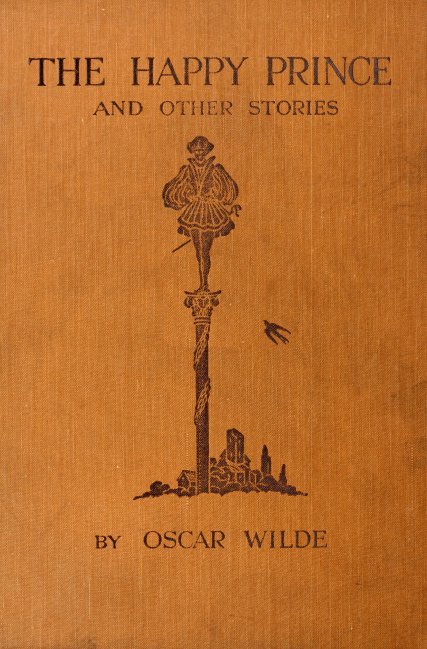
A gilded statue watches his city from a column, sees every sorrow in it, and gives
himself away — sapphire eyes, gold leaf, ruby — through the beak of a swallow who
keeps meaning to leave for Egypt. Around the title tale stand four more: a
nightingale who buys a rose with her life, a giant who walls spring out of his
garden, a devoted friend devoured by a talkative one, and one extremely conceited
firework. Wilde made these up aloud for his own two boys, and they are the rare
fairy tales that give the parent as much as the child.
What to know
Each tale is a self-contained sitting — ten to twenty-five minutes aloud — which
makes this one of the most flexible read-alouds on our shelf, and the grade 4–7
band is for reading it alone: Wilde’s vocabulary is genuinely literary (Accelerated
Reader puts the unabridged title story at a 6.9 book level), but the plots follow
clean fairy-tale rails a six-year-old listener can ride. Know going in that these
tales end sadly on purpose — the deaths are gentle, dignified, and real, and the
content note locates every one — and that Wilde plays the sorrow against comedy
kids reliably find hilarious. Our edition is the 1913 Charles Robinson printing:
twelve colour plates with their printed legends, his pen-work in the margins, a
decorated initial opening each tale, and his cherub cartouche carrying Wilde’s
dedication to his friend Carlos Blacker.
Life when written
Wilde wrote these in London in the mid-1880s, in the house on Tite Street, Chelsea,
where he was raising two small sons, Cyril and Vyvyan — he was editing a women’s
magazine to pay the bills, and the great plays and scandals were still years ahead.
The tales were told before they were written: he spun stories for his boys at
bedtime, and his son Vyvyan remembered him in tears telling The Selfish Giant,
saying that really beautiful things always made him cry. London outside the nursery
window was exactly the city in the title story — grand squares within sight of
seamstresses working by guttering candles and children sleeping under bridges — and
Wilde put both halves on the same page and let his sons see them. Published in May
1888, the little book was his first real literary success.