Home › All books › The Princess and Curdie
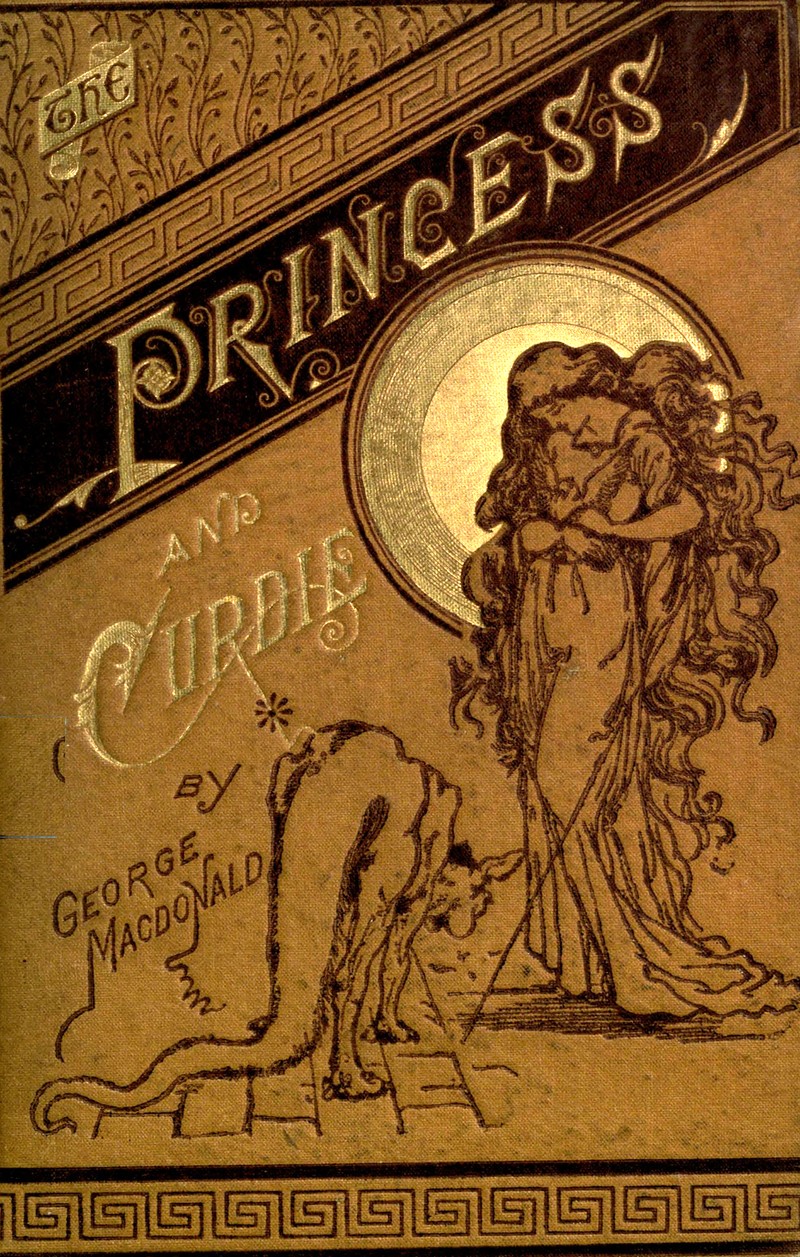
The Princess and Curdie cover
Fantasy · Adventure

The Princess and Curdie

George MacDonald · first published 1883

MacDonald's 1883 sequel: Curdie is given hands that can feel what a person is turning into on the inside, handed a monster for a companion, and sent alone to a city where the king is being poisoned by his own doctor.

Free EPUB & KindleGrades 5–8Original James Allen (the 1883 J. B. Lippincott first American edition — all eleven of the first edition's drawings) art
Worth knowing ⓘ
Worth knowing: The book opens with Curdie shooting a white pigeon out of the air with an arrow for the pleasure of hitting it; it falls broken-winged and bleeding, he carries it in his hands, and the whole novel proceeds from that page. In chapter eight the old princess tells him to thrust both arms into a fire of roses up to the elbows, and MacDonald describes the pain from inside it — Curdie holds on until it passes and his hands come out unhurt. From then on his gift is to feel, in a handshake, the animal a person is turning into; several courtiers turn out to have claws and paws, and the book means this literally. Lina and the forty-nine 'Uglies' are grotesque by design and gentle by nature. The violence is real but brief: Lina breaks two dogs' necks in the market at Gwyntystorm and the butchers come at Curdie with their knives (chapter 14); the battle in chapters 32–33 has the beasts mauling an invading army, with wounded carried off the field; and in chapter 34 the lord chamberlain is bound alive to the body of a dead beast in front of the city and led away. The king is being poisoned nightly by his own physician, Dr. Kelman, across chapters 19–23, and is shown weak, confused and half-delirious. The palace servants spend most of the book drunk on the king's wine. The religious frame is explicit rather than background — MacDonald was a preacher, the old princess acts as a providence, and the moral argument is stated out loud on many pages — though the word God appears once and no church, scripture or prayer service is in it. There is no racial or ethnic language of the period in this book. The ending is the thing to know before you hand it over: Curdie and Irene marry and rule well, and then, in the last two hundred words, they die childless, the city chooses a greedy king who mines away the pillars holding up the rock, and Gwyntystorm collapses at noon with 'the cries of men and the shrieks of women' — after which, MacDonald writes, its name ceased from the lips of men. Readers have argued about that page since 1883. No word here has been altered.

EPUB works on any device · two-minute setup guide → ·listening & print links go to Amazon (affiliate)

Why your kid will love it

01

A handshake that tells you the truth

The old princess makes Curdie thrust both arms into a fire of roses, and what he comes out with is this: when he takes someone's hand, he feels the hand inside it. A courtier's palm closes on his and he is holding a bird's claw. Another is a paw. Some hands are becoming more like hands. He tries it first on his own mother, terrified of what he'll find, and finds a queen. Every kid who has ever suspected that a smiling adult was up to something will recognise the gift immediately, and the first thing they will do is grab your hand.

02

Lina, and then forty-nine more of her

Lina is the ugliest thing in the book — green eyes, a tail like a snake's, teeth that show when she pants — and she lays her chin in Curdie's palm like a dog. Then, walking through a wood at night, she fights and wins over one monstrous animal after another until forty-nine of them are following her: a boa constrictor on four stumpy legs with two useless little wings it flutters as if it believes it can fly, and forty-eight others MacDonald says he cannot describe. It is a monster army led by a monster who is really somebody's soul, and it is the funniest and strangest thing in either book.

03

One boy inside a sleeping palace

The back half is an infiltration. Curdie gets into the king's house through a wine cellar, finds a rotten door with his candle, hides behind a bed curtain with Lina flat underneath, and spends his nights watching a poisoned old man sleep while the household drinks its way through the royal cellar downstairs. Nobody is coming to help. He has a mattock, a monster, and a girl his own age who has worked out on her own that her father's medicine is killing him.

Reading it together?

Warm-ups, real questions, and something to do together. No worksheets.Book club questions →

The background for parents

The pitch

A year or two after the goblins, Curdie is a miner’s boy going slowly and quietly bad — nothing dramatic, just a boy who has stopped bothering — and one evening he shoots a white pigeon out of the sky because he can. The bird belongs to the great-great-grandmother in the tower, and she does not punish him. She tells him to put both arms into a fire made of roses, and when he takes them out he can feel, in any handshake, the creature a person is turning into inside. Then she sends him away from the mountain altogether: down to Gwyntystorm, the king’s own city, where the shops cheat, the servants drink the royal cellar dry, the councillors have claws, and the doctor at the king’s bedside is killing him a spoonful at a time. Curdie goes with a mattock, a hideous loyal monster called Lina, and forty-nine more monsters behind her. It is the strangest thing MacDonald wrote for children, and the last two hundred words of it have been arguments at kitchen tables for a hundred and forty years.

What to know

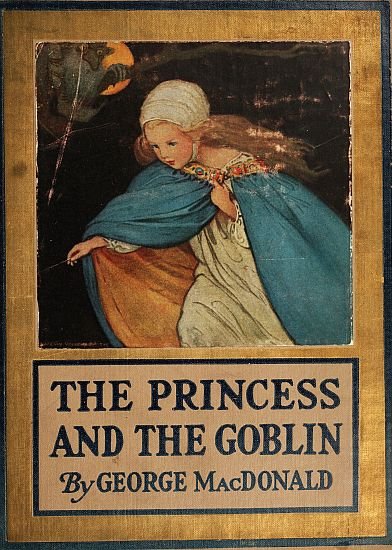
Read The Princess and the Goblin first — it is free here, it comes complete in itself, and this book opens straight into its tower without explaining anything. Then leave a gap. The sequel is a step up in every direction: Accelerated Reader measures the full text at 8.4 against the first book’s 6.1, the published Lexile is 1120L, and the difficulty is not just sentence length. The goblins were comic villains a six-year-old could laugh at; here the villains are a physician, a lord chamberlain and a town, and the book is arguing with you about what a person is. Families who read the first aloud at six and seven usually find this one lands at nine or ten. It reads aloud beautifully — MacDonald was a preacher and the sentences are built for a voice — and a listener can go younger than a reader can. Our text is the complete 1883 novel in its first American printing, J. B. Lippincott of Philadelphia, carrying all eleven of James Allen’s drawings from the first edition, each placed at the page the printed book bound it against, with its own legend beneath. Allen works in pure line, so we took the plates from a full-resolution scan of the same copy rather than the reduced ones the free text carries. The cover is that copy’s own gold-on-brown board. Read the content note before you hand this over — not for anything coarse, there is none, but because of what happens on the last page.

Life when written

MacDonald wrote it in England and it ran as a serial in Good Things: A Picturesque Magazine for Boys and Girls between January and June 1877 — six years before it reached hard covers, which is unusual and suggests a book nobody was in a hurry to sell. He was fifty-two, he had eleven children, and 1877 was the year he was granted a civil-list pension of £100 for services to literature, which tells you how the sums had been working out. Then tuberculosis came through the household: Mary Josephine died in 1878, Maurice in 1879, and from 1879 the family lived at Bordighera on the Italian coast, in a house they called Casa Coraggio — Bravery House — where they staged plays and gave readings and MacDonald wrote nearly half his life’s work. Chatto & Windus published The Princess and Curdie as a book in 1883, with James Allen’s eleven illustrations; Lippincott issued it in Philadelphia the same year. Between the serial and the book, in other words, he buried two of his children. Nobody can say what that did to the last page, and MacDonald never explained it.
Part of a series

The Princess and Curdie is book 2 of 2 — MacDonald wrote two books about Princess Irene and the miner boy Curdie, eleven years apart — a fairy tale and then its strange, darker sequel. Most families only ever hear of the first.All 2 books in order →

If they like it, read these next

Modern books (still in copyright, so not free) that scratch the same itch.

The Golden Compass by Philip Pullman

For the kid who could not stop thinking about the handshake. Pullman's daemons do the same job from the outside: your soul walks beside you as an animal, and when you grow up it settles into the shape of what you actually are. Same idea, a century later, at novel length.

Peterson names MacDonald as the writer he learned from, and it shows: an occupied town, a family of children who turn out to matter, and Fangs — soldiers who traded their humanity for scales, which is Curdie's gift made visible from the start.

Affiliate links. They never affect our picks.

Prefer a printed copy? Puffin Classics paperback, with Helen Stratton's illustrations (affiliate links). Not sure whether your reader needs the original or an abridged edition? Our guide to choosing →

Read it on any device

Quick answers

What age is The Princess and Curdie right for?

We shelve it for grades 5–8 — that's where the language and the length sit for a reader on their own. Read aloud, it works earlier, from about age 8–9 — kids follow a story by ear well before they can read it alone.

What reading level is The Princess and Curdie?

The unabridged text measures 1120L Lexile, AR level 8.4 (10 points). (for the full text; library catalogue records pair it with ATOS 8.4 on explicitly unabridged editions. A long step up from The Princess and the Goblin's 1030L.) In everyday terms: grades 5–8, and easier as a read-aloud.

Is The Princess and Curdie scary?

Some — a monster army, a king slowly poisoned, and a last page in which a whole city falls. The book opens with Curdie shooting a white pigeon out of the air with an arrow for the pleasure of hitting it; it falls broken-winged and bleeding, he carries it in his hands, and the whole novel proceeds from that page. In chapter eight the old princess tells him to thrust both arms into a fire of roses up to the elbows, and MacDonald describes the pain from inside it — Curdie holds on until it passes and his hands come out unhurt. From then on his gift is to feel, in a handshake, the animal a person is turning into; several courtiers turn out to have claws and paws, and the book means this literally. Lina and the forty-nine 'Uglies' are grotesque by design and gentle by nature. The violence is real but brief: Lina breaks two dogs' necks in the market at Gwyntystorm and the butchers come at Curdie with their knives (chapter 14); the battle in chapters 32–33 has the beasts mauling an invading army, with wounded carried off the field; and in chapter 34 the lord chamberlain is bound alive to the body of a dead beast in front of the city and led away. The king is being poisoned nightly by his own physician, Dr. Kelman, across chapters 19–23, and is shown weak, confused and half-delirious. The palace servants spend most of the book drunk on the king's wine. The religious frame is explicit rather than background — MacDonald was a preacher, the old princess acts as a providence, and the moral argument is stated out loud on many pages — though the word God appears once and no church, scripture or prayer service is in it. There is no racial or ethnic language of the period in this book. The ending is the thing to know before you hand it over: Curdie and Irene marry and rule well, and then, in the last two hundred words, they die childless, the city chooses a greedy king who mines away the pillars holding up the rock, and Gwyntystorm collapses at noon with 'the cries of men and the shrieks of women' — after which, MacDonald writes, its name ceased from the lips of men. Readers have argued about that page since 1883. No word here has been altered.

Is the free ebook really the whole book?

Yes — the complete, unabridged text, with the original James Allen (the 1883 J. B. Lippincott first American edition — all eleven of the first edition's drawings) illustrations. The Princess and Curdie was published in 1883, so it's in the US public domain: sharing it free is legal, and there's no signup or catch. We build the ebook ourselves from the original edition.

More free classics like this